City budgets aren’t just a tracker of how much money we take in and spend. They’re moral documents that highlight which people and what values we prioritize.
Unfortunately, Mayor Muriel Bowser’s newly released budget sacrifices transparency, equity, and increased affordability, in service to secrecy and backing billionaires. At a time when DC is facing a $400 million shortfall, the mayor is handing out $972 million for RFK stadium while claiming to “only” spend $850 million on the billionaire pet project. Josh Harris, owner of the Washington Commanders, is the fifth wealthiest person in the DMV with a net worth of nearly $10 billion. Meanwhile, while Bowser helps billionaires with their pet projects stadiums, she’s proposing cuts to essential services and programs that everyday DC residents rely on.
Mayor Bowser’s most recent budget puts important housing, energy affordability and climate programs that are a lifeline for low- and middle-income DC residents on the chopping block. The budget entirely eliminates emergency rental assistance and the Tenant Opportunity to Purchase Act, while the Healthy Homes Act, Home Purchase Assistant Program, and other homeowner assistance programs that play a part in keeping longtime residents in DC could see their budgets slashed.
The timing of these proposed cuts couldn’t be worse. Mass layoffs at the federal level have undermined critical jobs that serve as a backbone to the region’s middle class. DC residents could also see energy costs rise if the DC Public Service Commission approves a potential 12 percent gas rate hike this summer, which will make it even harder for the 44.7 percent of DC renters who are rent-burdened from making ends meet.
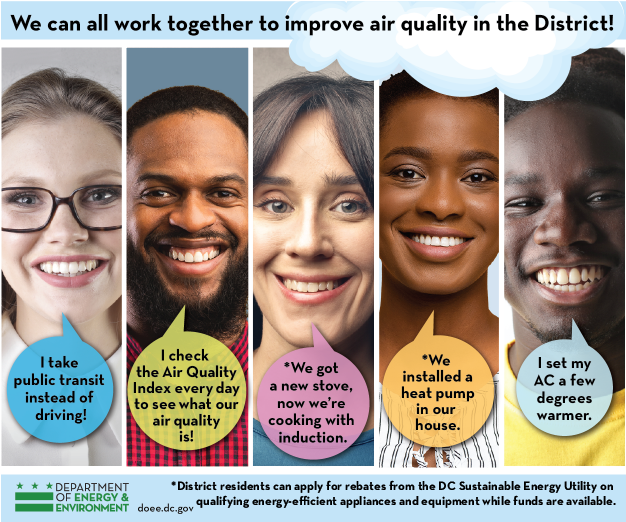
Thanks to the leadership of the DC Council, the District has created programs and resources to provide relief. Take the Sustainable Energy Trust Fund (SETF), which raises funding to conduct home energy audits, help low- and moderate-income residents weatherize their homes, and—thanks to the Healthy Homes Act passed in 2024—upgrade to highly efficient electric equipment like heat pumps. These efforts can provide lifesaving cooling and year-round comfort, put real dollars back in peoples’ pockets in the form of lower monthly utility bills, and help preserve housing for residents.
By generating funds to offer residents clean, efficient equipment at no cost, the SETF has made a direct impact on the health and wellbeing of DC residents. Yet, the program now stands in the crosshairs of Mayor Bowser’s funding cuts, with her proposed budget raiding nearly $70 million from the fund. Other critical climate policies, such as the District’s Building Energy Performance Standards (BEPS) and Net Zero requirements, that clean up health-harming pollution by upgrading buildings with clean energy were paused.
As the rising cost of living makes life more difficult in DC, programs that support homeownership, lower costs, and help everyday residents should be supported and invested in. Instead, our hard-earned tax dollars are set to be sent across the river for a new stadium that will enrich billionaires.
Our next budget will reflect which values we uphold as a District. We can’t eliminate critical programs that DC.s lower and middle class depend upon for a stadium that will benefit the few. This budget season, our leaders must take a hard look in the mirror and decide who ultimately deserves to be prioritized, or suffer the consequences.
Born and raised in DC, Michelle Hall is a volunteer with the Washington Interfaith Network who currently resides in Ward 7.